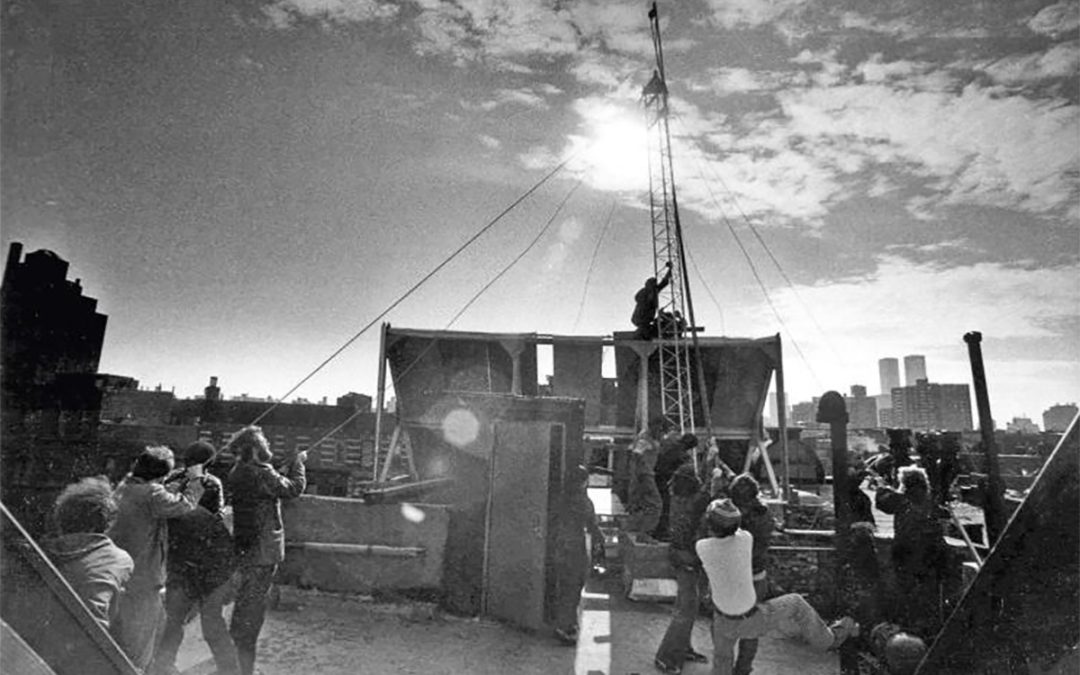
In the 1970s, hundreds of New York City blocks were burning. Landlords walked away from their buildings, stopped paying taxes, and left tenants with no heat, no hot water, elevators in disrepair, broken windows and leaking roofs. Over time, many became nearly uninhabitable. Tenants saved those buildings. Now their homes are under threat again, this time by the City.
The City Made a Deal
When landlords stopped paying taxes, the City took their buildings through tax foreclosure, known as “in rem.” According to the City, it “acquired many residential buildings that were abandoned by their landlords and were in financial distress” during the 1970s and 1980s.
The City had no money to repair and maintain them and no good way to run them. At the time, the City was often called New York’s largest slumlord. So it offered tenants a deal. Through programs like the Tenant Interim Lease program, tenants who stabilized their building could buy them. Tenants often bought apartments for a nominal price, sometimes as little as $250 per unit. Others paid tens of thousands of dollars per unit for decrepit buildings that needed hundreds of thousands of dollars in repairs. HDFCs are not all alike.
The buildings became Housing Development Fund Corporation co-ops, or HDFCs. They were incorporated under Article XI of New York’s Private Housing Finance Law (and the Business Corporations Law), which requires them to house “persons and families of low income.”
Many of the families who took that deal were Black, Latino, and immigrant New Yorkers who, as one Columbia University study put it, “stayed to fight for their communities.”
Tenants Did the Work
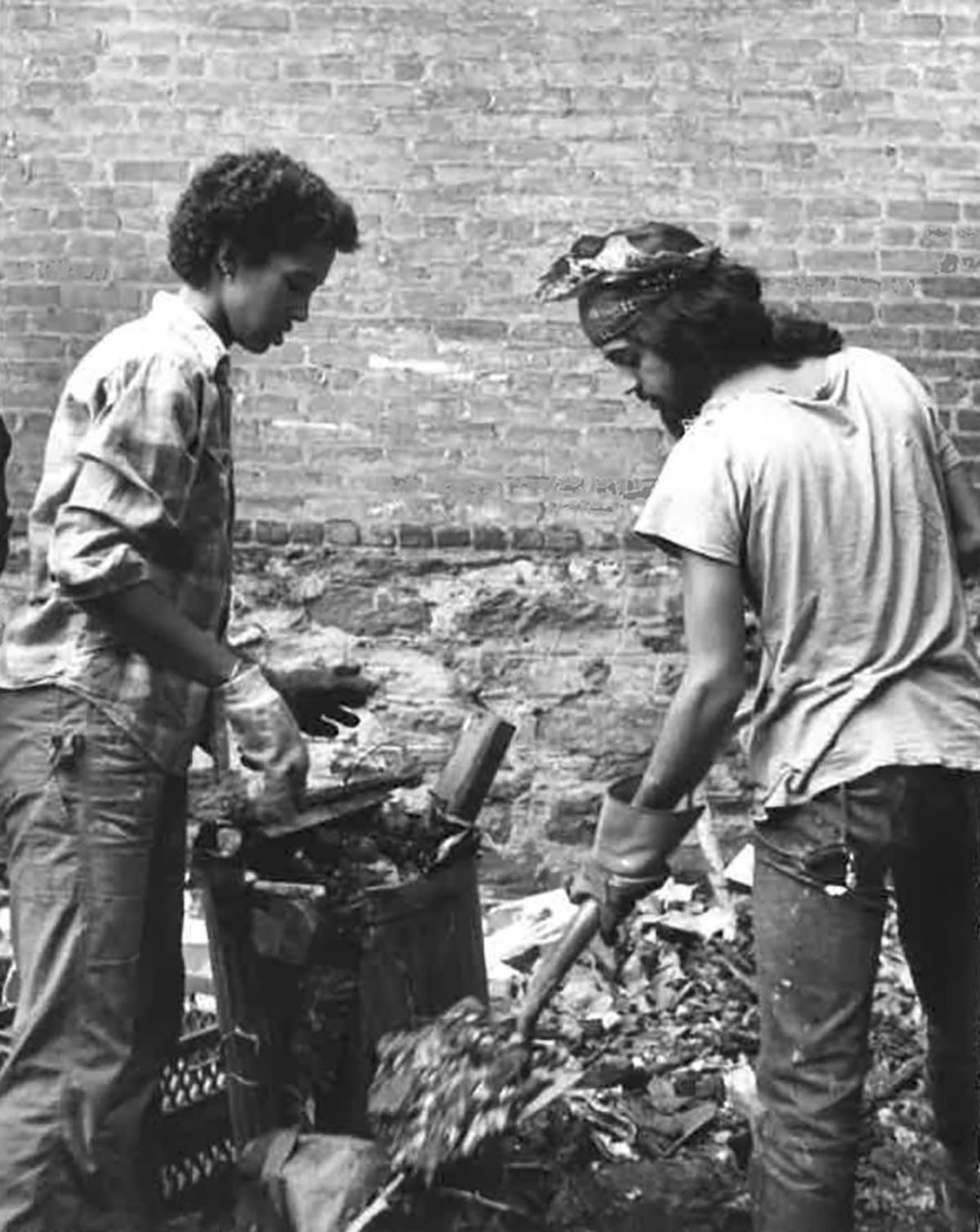
These tenants turned homeowners invested their own savings, went into debt, and used their own labor to make these buildings their homes, the very definition of “sweat equity.” As a longtime housing organizer described it:
“There was no heat, no hot water, and the roof was leaking, so they went up on the roof, they patched it, they made a contract with Con Ed for their gas and paid the oil bill and did all that, and they started running their building.”
The new homeowners governed themselves. They elected boards, kept the books and paid for repairs. The resale restrictions attached to the original sales were time-limited, and most have long since expired.
The deal was ownership. And it worked. Today there are over 1,100 HDFC co-ops, home to more than 100,000 New Yorkers, many of them first-time homeowners, retirees, and people on fixed incomes, from communities traditionally shut out of homeownership.
The Tax Break, and the 2029 Deadline
In 1989, the City created a property tax exemption for HDFCs, called the DAMP exemption. It runs for 40 years and ends in 2029, a blink of an eye when it comes to real estate.
As the expiration nears, boards report that lenders are pulling back. Even HPD Commissioner Dina Levy warned in October that a building that needs to refinance won’t get a bank loan without certainty that the tax exemption will continue. “We need to pass it this year,” she said.
Now the City Wants the Private Buildings Back
HPD views the DAMP expiration as leverage to push HDFC co-ops into a new regulatory regime that would dilute our hard-earned property rights and destabilize our buildings’ finances. Until now, its tool has been a new regulatory agreement, required in exchange for a renewed tax exemption or City loans.
In December 2024, for example, the Renaissance HDFC at 130 Malcolm X Boulevard in Harlem signed a regulatory agreement in exchange for a property tax exemption. It included:
- Price caps. No apartment can sell above a “Maximum Sale Price” set by a formula.
- Income and asset limits on every buyer: income at 165% or 250% of area median, and assets capped at 175%.
- A forced 10% flip tax on every seller’s profit.
- A required outside Monitor, paid by the co-op, that must approve every sale.
- City-run sales through Housing Connect, the City’s lottery platform.
- HPD can take over the board. It can replace directors with a two-thirds majority of its choosing, and seek a receiver to run the building.
HPD’s draft agreement for a Brooklyn HDFC goes even further:
- When the building sells an apartment it owns, 90% of the proceeds go to pay down City loans while they’re outstanding.
- Children of the owners who are not income-eligible must sell the apartment within one year. That gives a family’s next generation a choice: stay poor or lose your home.
The families who rebuilt these homes are being forced to hand control back to the City that once abandoned them. That’s a clawback.
Compare that with what ordinary co-ops get. Market-rate co-ops, even luxury buildings, receive a property tax abatement of 17.5% to 28.1% without giving the City control of their boards or their sales.
We’ve Been Here Before
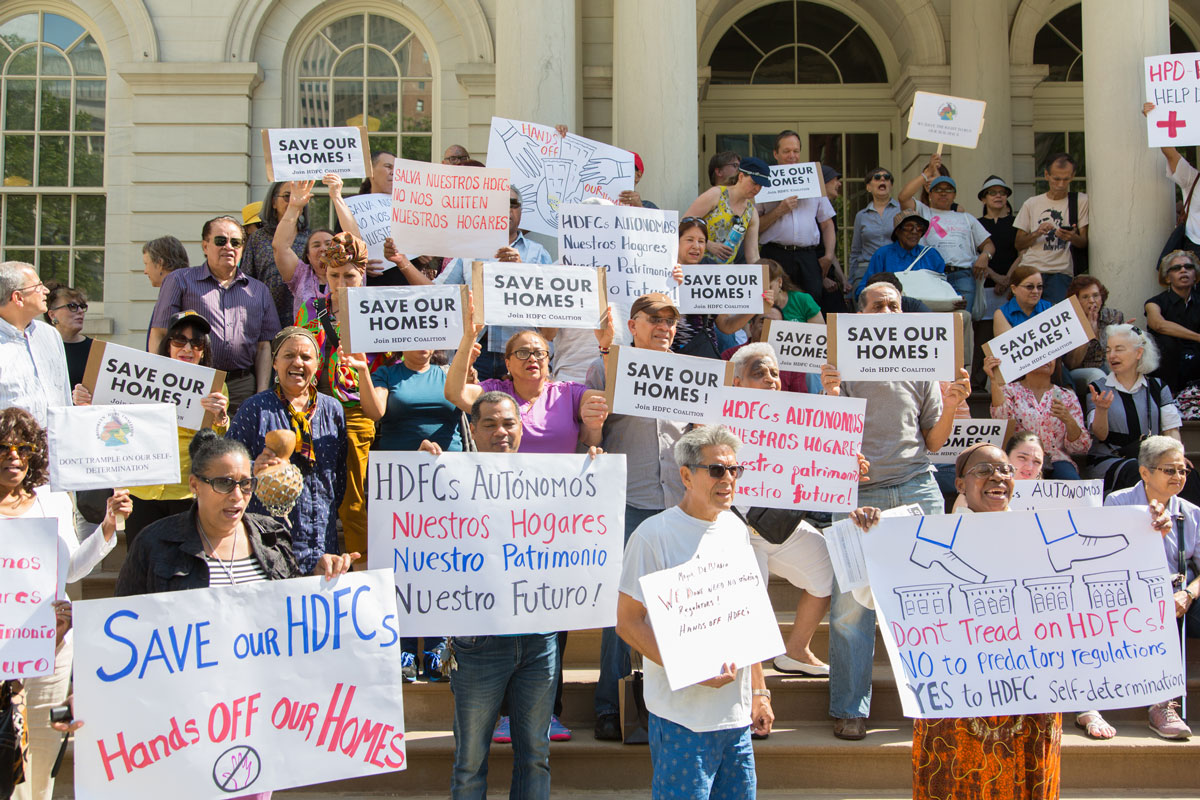
In February 2017, the New York Post’s Isabel Vincent and Melissa Klein exposed a City plan to put about 1,200 HDFC co-ops under 40-year agreements with City-chosen monitors and price caps. Critics called it a “land grab.” Due to an outcry by HDFC homeowners, Mayor de Blasio “paused” the plan a few months later.
Today’s restrictions go even further than HPD’s 2016 proposed agreement, which did not require lottery resales. HPD’s 2016 presentation even offered a carve-out: owners who had bought at high prices could opt out of the resale price cap and asset cap for up to a third of a building’s units, so they “are not unfairly penalized at the time they wish to sell.” That protection is gone in the new version.
The Same Restrictions, Written Into Law
This fall, HPD Commissioner Dina Levy told a community meeting with Council Member Harvey Epstein that the DAMP renewal bill “will not likely require a regulatory agreement.” That is welcome news. But she also said HPD is discussing “deeper affordability restrictions on resale,” enforced through building bylaws “since there won’t be a regulatory agreement.” The same kinds of restrictions could come back, written into the law instead of a contract.
Changing the vehicle doesn’t change the result. Fannie Mae treats a co-op as ineligible, absent special approval, when “the co-op corporation places a limit on the amount of return that can be received when stock or shares are sold.” A price cap in the bylaws is exactly that.
Why These Restrictions Fail, in a Contract or in the Law
HPD says these restrictions protect affordability. But HDFCs are already affordable. Their own documents cap buyer incomes at 60% to 165% of area median income (depending on the building), and HDFC apartments already sell for about 61% below comparable market-rate co-ops.*
Wherever they are written, the new restrictions add City control and change the rules after HDFC homeowners kept their end of the deal. That’s unfair to the original shareholders who rebuilt these buildings, and just as unfair to families who later bought from them, often paying hundreds of thousands of dollars with significant mortgages and HELOCs.
A formula price cap could leave those families owing more than their apartment can legally sell for, and it would invite litigation.
Price caps also put the buildings themselves at risk. Despite HPD’s persistently incorrect label, HDFCs are not “limited-equity” co-ops. A resale price cap, in any form, would turn them into limited-equity co-ops, which is not what anyone agreed to when they bought.
Freddie Mac won’t buy share loans in co-ops that cap resale gains, and Fannie Mae won’t either without a special project-by-project approval. Notably, income limits like the ones HDFCs already have don’t trigger that rule. Price caps do. Put simply, most banks make share loans only if they can sell them to Fannie Mae or Freddie Mac, so in a building that caps resale prices, buyers could not get an ordinary mortgage from a traditional bank. Boards already report that lenders are pulling back, and price caps would finish the job, leaving the City as the only place left to borrow.
Resale caps also cut into flip-tax revenue, the HDFC’s lifeline. With fewer sales at lower prices, many buildings will be unable to rebuild their reserves. The next boiler or roof then means a big assessment or a jump in maintenance charges. And when that happens, shareholders on fixed incomes fall behind first. That’s how a healthy building becomes a “distressed” one.
Add the rest of the package (lottery resales, a monitor the building must pay for, HPD’s power to replace the board) and the result is plain.
None of this creates a single new affordable home. It sets HDFC co-ops up for failure, turns these first-time owners back into tenants, and destroys perhaps the most successful affordable homeownership program in the City’s history.
There’s a Better Fix (and It’s Free)
The HDFC Fairness, Preservation, and Affordability Act (S.880/A.2707), sponsored by Sen. Robert Jackson and Assemblymember Al Taylor, would:
- Make the DAMP exemption permanent.
- Fix a quiet injustice. Because of how DAMP operates, some HDFCs with low assessed values (many in the South Bronx) get no tax break even though they follow the rules. Under the bill, every HDFC could choose the greater of DAMP or twice the regular co-op abatement, so no building is left out.
- Keep the income limits HDFCs already have for new buyers, so apartments stay affordable for the next generation.
- Add a workable self-reporting and audit framework to make sure HDFCs stay in compliance with income limits, without price caps, monitors, or City takeover of boards. Shareholders keep their buildings and their boards.
The bill should stay clean: price caps, asset tests, and forced sales by heirs do the same damage in a statute or in bylaws as in a regulatory agreement. HPD’s approach began well before Mayor Mamdani took office, and the 2029 deadline arrives during his administration. He has a chance to set a new course: protect sustainable affordable ownership, let families pass their homes to the next generation, and keep the City’s word to the people who saved these buildings.
What You Can Do
- Call your State Senator and Assembly Member. Ask them to support S.880/A.2707. Scripts and contacts are here.
- Ask your Council Member to support Res. 9, which calls on Albany to pass the bill.
- Follow @savehdfcs and share this post.
- Learn more and sign up for our mailing list at savehdfcs.org.
A deal is a deal. Tell the City they must keep it.
*UrbanDigs 2020–24 Manhattan, sales capped at $3M.